
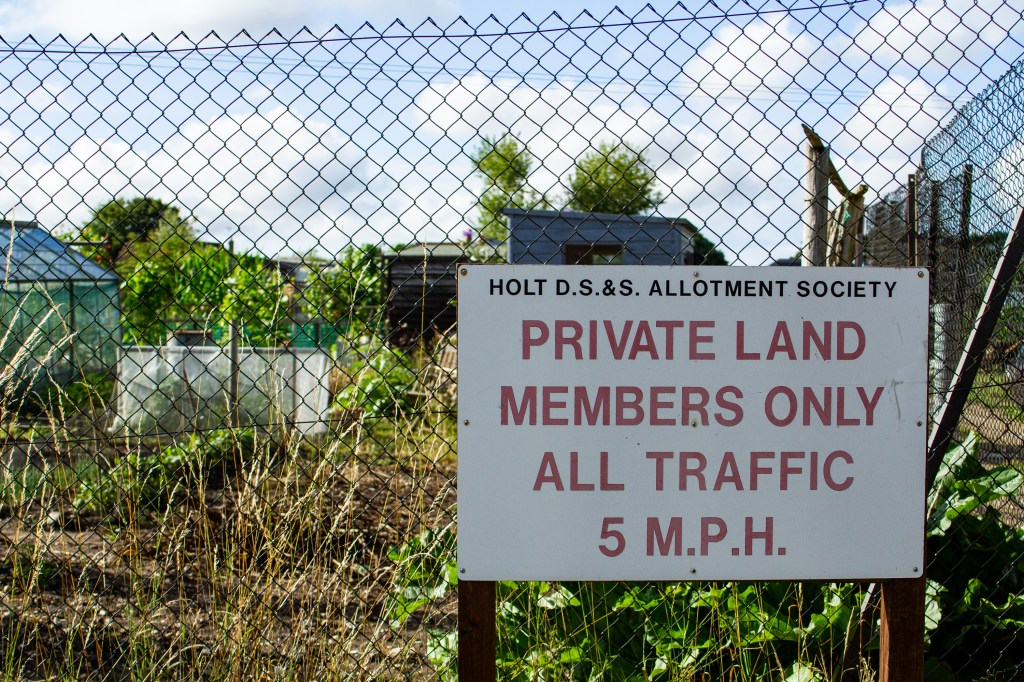
The Holt Allotment Society is managed by a dedicated committee of volunteers who work to ensure the smooth running of our allotments and facilities. The committee is responsible for overseeing plot allocations, maintaining communal areas, managing the car park, and organising events for our members. We are committed to creating a welcoming and supportive environment for all allotment holders and those who use our services.
Our committee consists of a Chair, who leads the society and represents members’ interests, a Vice Chair, who provides support and steps in when needed, a Treasurer, who manages the society’s finances, and a Secretary, who handles administration and communications. Alongside them, we have several committee members who contribute their time and expertise to help with decision-making and ongoing projects. We always welcome input from members, and if you have any ideas or would like to get involved, please feel free to contact us.
Role Profiles
Chair – Paul Mindham
The Chairperson is responsible for delivering an effective committee to the society. This requires collaboration with other committee members, reflecting both the leadership and support aspects of the role. The Chairperson must serve the committee while also providing clear guidance, always maintaining accountability, and ensuring that the committee fulfils its objectives successfully.
- Committee – Ensure that all committee members and officers fulfil their respective responsibilities collaboratively.
- Identification – Identify any gaps in skills within the Committee and recruit individuals with appropriate qualifications to fill those positions.
- Team Building and Coordination – Facilitate effective cooperation among committee members in their roles, ensuring optimal efficiency and avoiding unnecessary overlaps or conflict.
- Monitoring – Oversee the performance of committee members and officers, leading efforts to enhance effectiveness and address inadequate performance as necessary.
- Delegated Authority – Beyond routine duties, the committee may authoriSe the Chairman to act on its behalf in certain matters. Such actions should, whenever possible, be undertaken with the knowledge and endorsement of the Committee.
- Housekeeping – Confirm that the committee has established a schedule of meetings, ensure all documents are prepared to a high professional standard and distributed well in advance, and verify that meetings take place in suitable, comfortable venues free from distractions.
- Agenda and Papers – Collaborate with the secretary and treasurer to develop the meeting agenda, carefully considering input from committee members while ensuring the agenda remains focused and relevant. Confirm that all necessary papers are prepared and circulated prior to meetings.
- Chairing – Conduct meetings with professionalism, maintaining an effective balance between individual perspectives and the overarching priorities of the society.
- Minutes – Oversee that the secretary’s minutes meet professional standards and are distributed promptly after each meeting.
Vice Chair – Tim Baker
The Vice Chairperson is entrusted with full delegated authority to act in the absence of the Chairperson (refer to the Chairperson Role Profile). Responsibilities include, but are not limited to:
- Covering during holidays
- Responding to emergencies or unavailability
- Attending and presiding over committee meetings
Treasurer – Carmel Blair
The Treasurer is responsible for safeguarding the financial integrity and assets of the society, diligently overseeing its financial activities and providing comprehensive reports to the Committee.
- Income and Expenditure – All income must be received, deposited into the society’s bank account, and payments processed appropriately. The Treasurer maintains control over cheque books and manages disbursements.
- Bookkeeping – Accurate records of income and expenditure are maintained, reconciled with bank statements, stored securely, and financial performance is regularly reported to the Committee.
- Budgets – An annual budget is prepared for review and approval by the Committee.
- Operational Oversight – Financial oversight extends to trading operations, site maintenance, and capital projects managed by others. The Treasurer also supervises the collection of rents and other charges.
- Monthly Accounts – Monthly accounts and financial reports are prepared and presented to the Committee for their review and approval.
- Annual Accounts – The Treasurer prepares annual accounts, arranges independent inspection or audit as necessary, and submits them to the Committee for approval.
- Legal Requirements – Annual returns are submitted to relevant regulators and local authorities, ensuring all financial records are properly maintained in accordance with legal obligations.
- Financial Strategy – Provide guidance to the committee regarding long-term financial strategy and planning, including the implications these have on annual budgeting processes.
- Bank Accounts – Oversee all payments made on behalf of the Society, ensuring expenditures are appropriate and relevant. Maintain the banking relationship and ensure all account details and related data are current.
Secretary –
- The Secretary is responsible for overseeing the routine operations of the society and its committee. This role additionally entails facilitating communication with plot holders and managing the administrative functions of the allotment site.
- Communication – The secretary serves as the primary channel for communication between the Society and any external organisations. This role includes disseminating information to members such as updates, announcements, and relevant news in a timely manner.
- The secretary is responsible for generating and maintaining all official notices, ensuring these are properly displayed on notice boards. When there are changes to site policies, regulations, or events, the secretary ensures that all members are promptly informed.
- Society Administration – Supported by the Chairman and Treasurer, the Secretary is tasked with overseeing communications with all external organizations affiliated with the Society, as well as managing the routine administrative functions. Responsibilities include addressing general enquiries and correspondence and maintaining accurate, up-to-date records, which encompass
- Articles of Association
- Tenancy Agreements
- Rules and Regulations
- Plot holder Guidelines
- Member Databases (Site Plans, Plot Waiting List, Member Details, Car Park Database, etc.)
- Share Certificates (Issuance and record management)
- N.A.S.L.G
- Holt Town Council
- Additionally, the secretary oversees maintenance of the Society’s website, email account, and Dropbox database, and ensures a comprehensive library of letters and forms is kept current.
- The secretary must maintain comprehensive and current records, including but not limited to:
- Committee Administration – Collaborate with the Chairperson and Treasurer to efficiently manage the administration of Committee and AGM meetings. Responsibilities include coordinating meeting dates and venues, distributing agendas and supporting documents in advance. The Secretary is tasked with recording detailed and accurate minutes during allotment society committee meetings, which serve as an official record of decisions, discussions, and actions. Minutes should be promptly circulated and appropriately filed within a few days following each meeting.
- Plot Letting – Handle plot inquiries, maintain an up-to-date waiting list, and ensure all new tenants complete the required documentation, which must be systematically filed.
- Rents – Provide rent receipts upon request and ensure timely collection of rents.
- Site and Plot Inspections – Arrange regular site and plot inspections with the Plot Inspection Team, and deliver comprehensive reports to the Committee regarding necessary actions.
- Liaison – Communicate effectively with tenants, oversee complaints, and issue termination letters as authorised by the Committee when circumstances require.
Inspection Team –
Plot Inspections – The Inspection Team retains the authority to evaluate allotment plots at any time. Inspections are conducted at least quarterly throughout the year to ensure adherence to the Tenancy Agreement and Rules for Allotment Plot Holders. Photographic evidence may be gathered for plots identified as non-compliant. Under the direction of the Committee and in accordance with established guidelines, the Inspection Team implements a three-step procedure:
- Improvement Letter
- Formal Warning Letter
- Notice to Quit
Probation Period Inspections
• The Inspection Team is responsible for overseeing the Probation Period for new members and will notify the Committee should any breaches of the 6-month Probation Period occur.
Committee Members
- Helen Banham
- Jim West
- Richard Delahaye
- Lynne Bond
- Nicky Bond
- Trevor Hooker
- Michael Beck
Committee members are responsible for making decisions collectively during meetings—whether conducted in person or via approved electronic methods—to fulfil the objectives of the society. Consequently, the majority of a committee member’s duties centre on contributing to the overall work of the committee. It is not necessary for each member to possess expertise in every matter addressed by the committee; rather, a team comprised of multiple individuals allows for a broader range of skills and knowledge.
Qualities
All committee members should possess three essential qualities:
- Commitment – Members are expected to demonstrate dedication to their society and its objectives, prioritising the collective interest over personal considerations.
- Competence – Members must contribute relevant expertise and experience to the committee’s work.
- Courage – Members should exhibit strength of character by advocating for what they believe to be right.
Responsibility
Committee members hold responsibility for the society’s operations but are not required to make every decision or possess detailed expertise in all areas of society activity. Many responsibilities may be appropriately delegated to officers or other designated individuals, while collective decision-making by the committee remains the standard unless authority is expressly delegated.
Committee members must identify and manage conflicts of interest, ensuring that all decisions are made exclusively in the best interests of the society. Those assuming officer roles are expected to arrange a thorough handover of records and property to their successor upon completion of their term.
It is essential for all committee members to review communications distributed by the Secretary, as oversight of member and plot holder relations falls under the Committee’s remit. The Secretary and the Committee remain accountable to these stakeholders.
 Holt Allotment Society